

Maritimer Transport: Größer intelligenter und umweltfreundlicher werden
Li Ying, a member of the 14th National Committee of the Chinese People's Political Consultative Conference (CPPCC), emphasized the need to enhance the maritime transport sector by making it 'larger, smarter, and more environmentally friendly.' Her comments were made during a group interview ahead of the opening session of the fourth meeting of the 14th CPPCC at the Great Hall of the People in Beijing.
As a professor at the Navigation College of Dalian Maritime University, Li pointed out that maritime transport plays a dominant role in international trade, handling a significant portion of global freight volume. She highlighted that economic development and national strength cannot be achieved without the support of maritime shipping.
Regarding the 'larger' aspect of development, Li noted that China already possesses the world's largest merchant fleet. The prominent characteristics of modern maritime equipment now include large-scale and high-tech features, showcasing advancements in vessel design and construction.
Li shared insights from her field research at the Shulanghu terminal in Zhejiang province, where she observed container ships capable of carrying vast amounts of cargo in a single trip, enough to meet the annual needs of a city. The deployment of ultra-large container vessels reaching substantial lengths has become commonplace on domestic shipping routes.
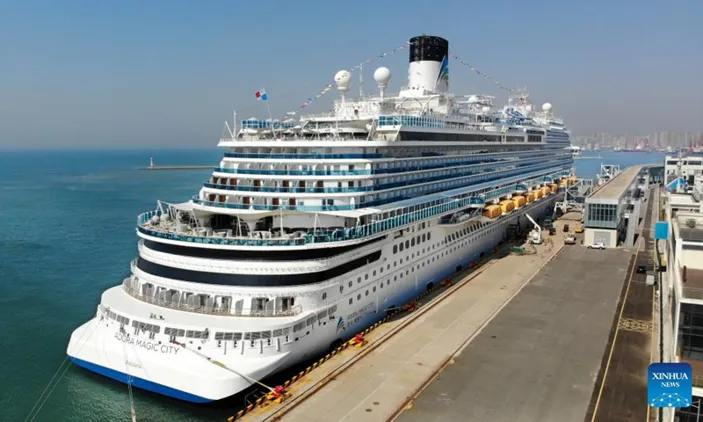
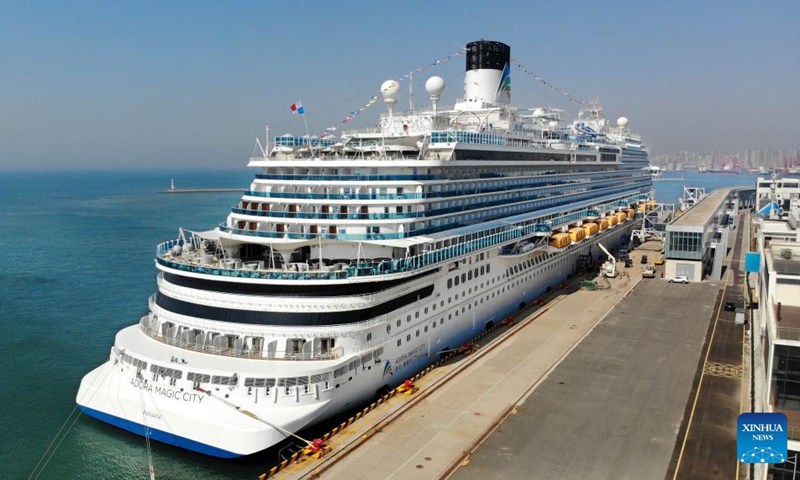
Simultaneously, China's first domestically built large cruise ship, the Adora Magic City, has been completed and put into operation. This achievement marks a significant milestone for China's shipbuilding industry, which has successfully developed major vessel types, including aircraft carriers and large liquefied natural gas carriers.
Li emphasized that 'smart' development is the core focus of China's technological upgrades in maritime shipping. The nation is vigorously promoting intelligent navigation support systems. By equipping ships with perception devices, vessels gain enhanced situational awareness, akin to having 'eyes' and a 'brain.'
The perception devices provide real-time information on sea conditions, while the collaborative management system calculates optimal routes and predicts arrival times. This upgrade allows for a seamless connection between onboard and shore information, automating repetitive tasks and ensuring safer and more relaxed journeys.
The push for 'green' progress is seen as crucial for the high-quality development of maritime transport in China. The establishment of green ports and ships is accelerating, with several ports conducting pilot projects aimed at achieving nearly zero carbon emissions through cleaner operational systems.
In shipbuilding, significant strides have been made towards sustainability. China's new orders for green vessels now dominate the international market. Methanol dual-fuel ships are already operational, while ammonia-powered and fully electric ships are under construction, marking a shift towards low-carbon maritime equipment.
Furthermore, Li indicated that advancements in maritime research will be applied to shipping routes and terminals. The development of digital and intelligent shipping corridors enhances the safety and resilience of maritime operations, guiding the sector toward efficient cargo movement.
Li expressed confidence that China will continue to improve its crucial maritime transport corridors and called for participation from all sectors of the maritime industry to collaboratively contribute to building a strong maritime state.
Lies das als nächstes
Maritimer Transport: Größer intelligenter und umweltfreundlicher werden
Li Ying fordert Fortschritte im maritimen Transport, größere und umweltfreundliche Schiffe für mehr Effizienz und Sicherheit.
Meta Platforms entwickelt Siliziumchips zur KI-Verbesserung
Meta Platforms entwickelt eigene Siliziumchips zur Verbesserung der Effizienz beim KI-Training und stärkt damit die Wettbewerbsfähigkeit.

Handelsdaten zeigen einen zugänglicheren chinesischen Markt in unsicherer Welt
China richtet sich auf den globalen Protektionismus aus und fördert einen einheitlicheren Binnenmarkt für internationalen Handel.